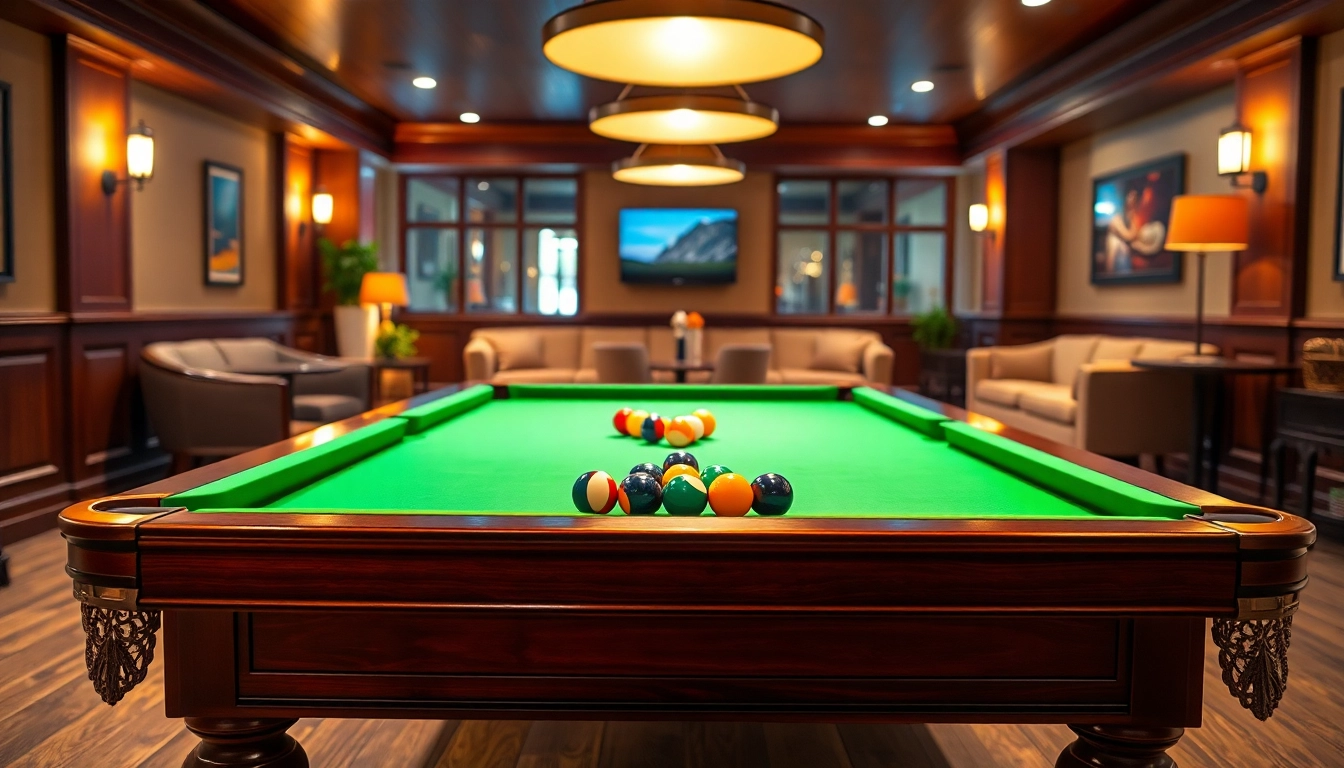
Introduction to Billiards: A Game of Strategy and Precision
Billiards, a game that evokes images of smoky rooms filled with intense competition, is both a beloved pastime and a professional sport. Its blend of strategy, skill, and precision sets it apart from other competitive activities. Enthusiasts and novices alike can enjoy this game, which has roots that stretch back centuries. In this article, we delve into the rich history of billiards, explore various game formats, and provide insights into developing essential skills, strategies, and overcoming common challenges. Whether you’re just starting or looking to refine your precision, understanding the nuances of Billiards is essential for mastering the craft.
History of Billiards: From Pastime to Professional Sport
The origins of billiards date back to the late 15th century in Europe, derived from lawn games like croquet. Initially played on grass, it transitioned to a tabled format with the introduction of pockets and the iconic cue stick. During the 18th and 19th centuries, billiards evolved into a popular indoor pastime, appealing to the upper and middle classes. It was during this time that various styles and rules began to take shape.
As billiards gained popularity, specialized gaming clubs emerged. By the 19th century, competitive play was formalized, leading to the establishment of international governing bodies. The creation of tournaments provided a structured environment for players to showcase their skills, transitioning billiards from a leisure activity to a recognized professional sport.
Overview of Different Variants of Billiards
Billiards encompasses several variants, each with its own unique set of rules and gameplay styles. The three main types are pool, snooker, and carom:
- Pool: This is the most widely recognized form, featuring variants such as eight-ball and nine-ball. Pool involves pockets on the table and requires players to sink balls in a specific order.
- Snooker: One of the most strategic formats, snooker is played on a larger table with smaller pockets. The game involves more balls and a distinct scoring system, emphasizing precision and tactical play.
- Carom: This variant is played without pockets, and the objective is to score points by hitting both the opponent’s ball and the object ball in one stroke.
Understanding Basic Rules and Equipment
Regardless of the variant, understanding the rules and equipment is fundamental in billiards. Essential equipment includes the cue stick, billiard balls, and tables of varying sizes and specifications for different types of play. Each game has its nuances regarding how balls are struck, how scores are determined, and the etiquette that governs play. Learning these basics equips players for both casual play and competitive settings.
Developing Essential Billiards Skills
Mastering Stance and Grip: The Foundation of Your Game
Success in billiards hinges on a player’s stance and grip. A stable stance aids in maintaining balance and control, while a proper grip allows for accuracy in shot-making. Begin by positioning your feet shoulder-width apart, ensuring your weight is evenly distributed. A strong grip on the cue stick, not too tight nor too loose, contributes significantly to shot execution and consistency.
Cue Control: Techniques for Accurate Shots
Cue control is paramount in billiards. Players must develop finesse in how they strike the ball, utilizing different techniques like follow, draw, and sidespin. Maintaining a consistent stroke motion and practicing various shot types will enhance your ability to control the cue ball's movement, leading to increased accuracy in your shots.
Improving Aiming Techniques: Finding Your Target
Aiming is crucial and can be refined through various drills. Techniques such as the ghost ball method, where players visualize the cue ball’s position, can significantly improve accuracy. Another effective strategy involves breaking down shots into component parts, allowing players to focus on specific angles and target areas for precise strikes.
Advanced Billiards Strategies to Elevate Your Game
Strategic Shot Selection: Knowing When to Take Risks
Every shot presents an opportunity, and strategic shot selection is vital. Players must assess risks versus rewards. Sometimes taking a conservative approach ensures higher chances of maintaining control of the table, while other moments may call for bold gameplay. Understanding your abilities and reading the table are essential components of effective decision-making in billiards.
Psychological Aspects: Staying Focused Under Pressure
Pressure situations are common in billiards, especially in competitive settings. Developing a strong mental game through visualization techniques, breathing exercises, and setting smaller goals can help maintain focus. A calm mindset allows players to execute their shots with greater precision, minimizing the potential for errors under stress.
Observing Opponents: Reading Their Moves
Learning to read opponents is an often-overlooked skill in billiards. Pay attention to their body language, shot selection, and tendencies. Understanding their playing style not only provides insight but can allow you to counter their strategies effectively. This psychological game adds another layer of depth to competitive play.
Billiards Game Formats and Competitions
Understanding Pool, Snooker, and Carom
As previously mentioned, pool, snooker, and carom are the primary variants of billiards, each with unique characteristics. Competitions across these formats extend from local leagues to international championships, often governed by distinct organizations. Players should familiarize themselves with the specific rules and regulations of each format to ensure competitive success.
Rules for Tournament Play: What You Need to Know
In tournament settings, adherence to rules is critical. Billiards tournaments typically follow formal guidelines regarding game structure, scoring, and player conduct. Familiarity with these regulations is essential for successful participation, as lapses can result in penalties or disqualification.
Local and National Billiards Championships
Billiards competitions range from grassroots events to prestigious national championships. Participating in these competitions can significantly boost a player’s skills, providing invaluable experience against diverse opponents. Engaging with the billiards community at these events also fosters connections, enhances learning, and inspires players to hone their craft.
Common Challenges and Solutions in Billiards
Troubleshooting Common Mistakes: From Mis-hits to Fouls
Every billiards player encounters challenges. Common mistakes include mis-hits, poor cue ball control, and fouls. Players should analyze their gameplay to identify these errors and implement specific drills targeting improvement, such as focusing on cue ball positioning during practice. Engaging with a mentor or coach can also help diagnose areas needing improvement.
Improving Consistency: Practice Routines That Work
Consistency is key in billiards, and establishing effective practice routines is paramount. Players should dedicate time to work on various shots, aiming exercises, and game scenarios. Tracking progress through meticulous practice logs can also help identify areas of strength and weakness, making focused improvement easier.
Resources for Learning: Books, Videos, and Online Courses
A wealth of resources exists for players eager to improve. Instructional books, online videos, and courses led by experts provide comprehensive insights into techniques and strategies. Engaging with these resources allows players to supplement their practice with theoretical knowledge, creating a well-rounded approach to skill development.
FAQs about Billiards
1. What is the primary equipment needed for billiards?
The essential equipment includes a cue stick, billiard balls, and a table tailored for the specific game variant, whether it be pool, snooker, or carom.
2. How can I improve my aim in billiards?
Improving aim involves practicing techniques like the ghost ball method and analyzing shots in parts, allowing you to pinpoint angles for more effective shots.
3. What should I focus on during practice sessions?
Focus on practicing stance, grip, cue ball control, and various types of shots to enhance consistency and overall skill as a billiards player.
4. Are there specific mental strategies for tournament play?
Yes, visualization techniques, practicing under pressure, and setting specific performance goals can help maintain focus during competitions.
5. How do I find local billiards competitions?
Check local billiards clubs, community centers, and online forums for information about upcoming tournaments and leagues in your area.
Contact Information
Call Us: +1 615-624-7821Email: [email protected]Address: 1276 Northwest Broad Street, Murfreesboro, TN, USA